Maine Coon Brushes and Combs: Which Grooming Tools Do You Need?
The grooming tools a long-haired Maine Coon needs, from a wide-toothed comb to a rubber mitt, what each one is for, and how to use them safely on mats.
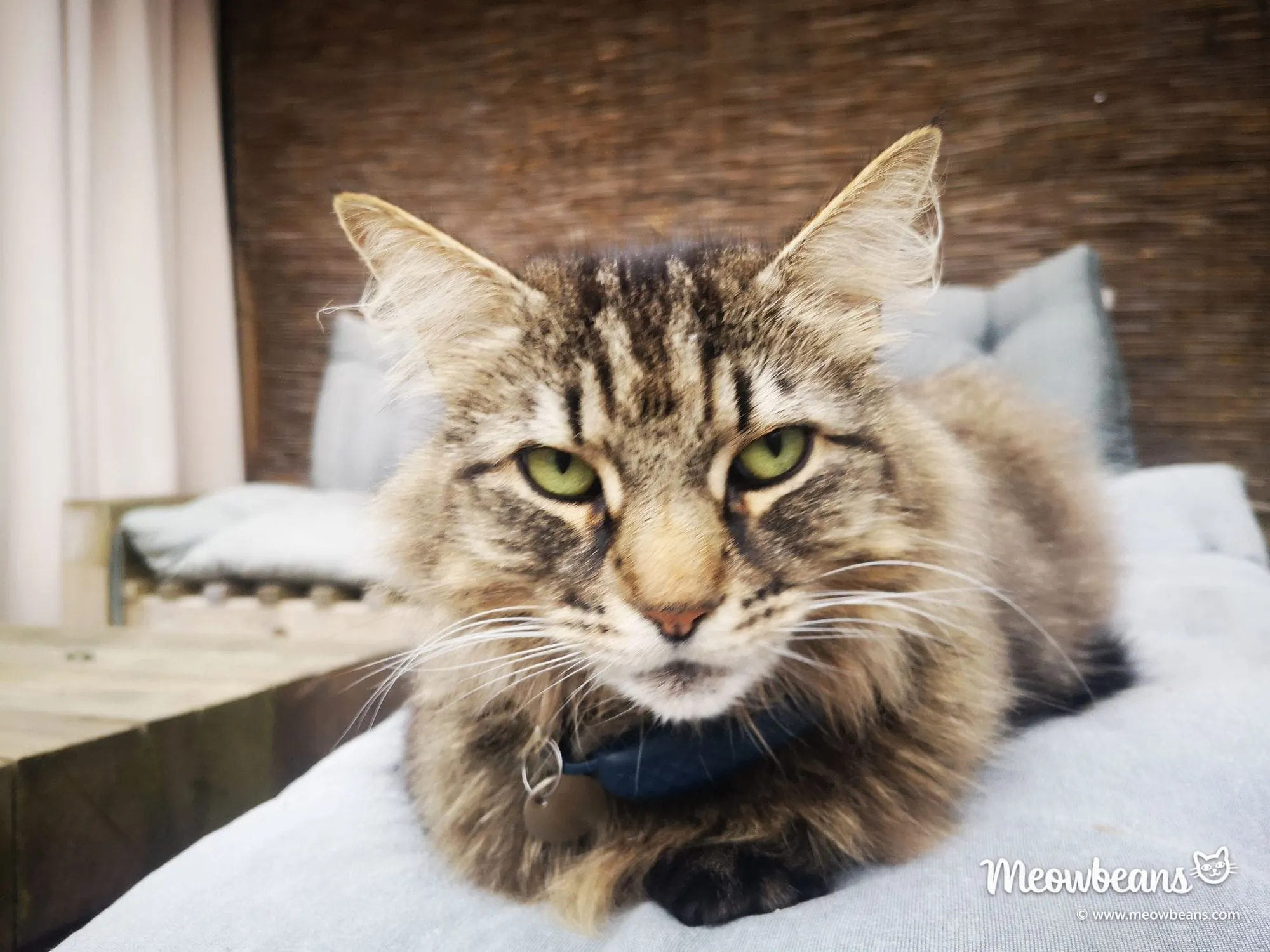
A Maine Coon’s coat is long, thick and made up of two layers: a dense undercoat covered by a heavier, glossy top coat. The fur is shorter on the head and shoulders and gets longer down the back, flanks and tail, with full, shaggy fur on the belly and back legs (GCCF). Keeping all that free of knots and mats is much easier with the right tools.
This guide covers the grooming tools worth having, what each one is for, and how to use them. For the full routine, including bathing, nails, ears and teeth, see our complete grooming guide.
Key Takeaways
- A wide-toothed comb is the one tool every Maine Coon owner needs. International Cat Care recommends combing a long-haired cat from head to tail with a wide-toothed comb to remove dead hair (International Cat Care).
- A rubber grooming pad or mitten is good for finishing off and picking up loose hair.
- Slicker brushes, rakes and detangling sprays are optional extras. Try them and see what suits your cat.
- Never use scissors on a mat, as it’s easy to cut the skin. Mats close to the skin are a job for your vet (Cats Protection).
How Often Should You Brush a Maine Coon?
Cats Protection says long-haired cats need brushing daily to stop their fur tangling and matting (Cats Protection), and International Cat Care says the same, adding that you should only groom for as long as your cat is comfortable (International Cat Care). Expect to do more in spring, when Maine Coons shed their thick winter coat (GCCF).
In practice, many owners brush as and when their cat needs it. Whatever your routine, check the places where mats form first: behind the ears, under the legs and between the toes. Our guide to Maine Coon shedding explains why the coat changes through the year.
The Grooming Tools Worth Having
1. Wide-toothed comb
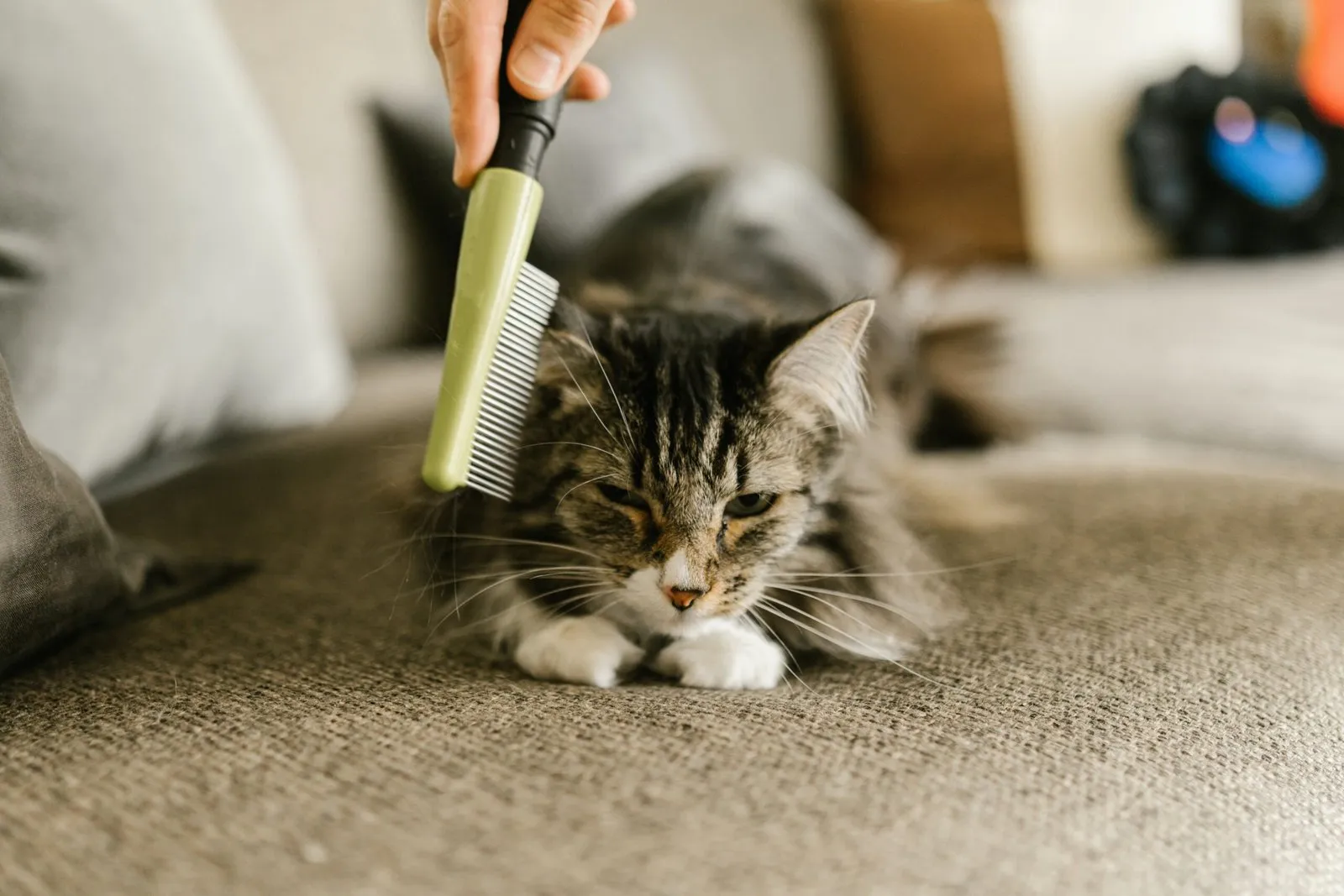
This is the essential tool. The wide gaps between the teeth go through a long, dense coat without pulling, and they find small tangles before they turn into mats. International Cat Care puts it first on its list of grooming equipment, and recommends combing from head to tail to remove dead hair (International Cat Care).
Look for a comb with smooth, rounded teeth, so it doesn’t scratch the skin, and a handle that’s comfortable to hold for a long session. Many owners also keep a comb with finer teeth for the short fur on the face and paws.
2. Rubber grooming pad or mitten
A rubber pad or grooming mitten is the second item on International Cat Care’s list. Use it after combing to pick up loose hair, then wipe your cat over with a damp cotton cloth or rubber glove to collect what’s left (International Cat Care). Many cats enjoy the feeling, so a mitt is also a gentle way to get a nervous cat used to being groomed. Cats Protection mentions grooming gloves too (Cats Protection).
3. Slicker brush
A slicker brush has lots of fine wire bristles packed closely together. It’s good at lifting loose fur from the top coat. Use it lightly: pressing hard can scratch the skin, and it’s easy to overdo it on thinner fur under the legs and on the belly.
4. Undercoat rake
A rake has one or two rows of long teeth that reach through the top coat into the undercoat. It’s useful during the spring moult, when a lot of dead undercoat needs to come out. International Cat Care lists rakes and slicker brushes as optional tools, so try them and find what suits your cat (International Cat Care).
5. Detangling spray
A cat-safe detangling spray can help a comb slide through a knotty patch. Only use a product made for cats, and never use anything meant for people or dogs.
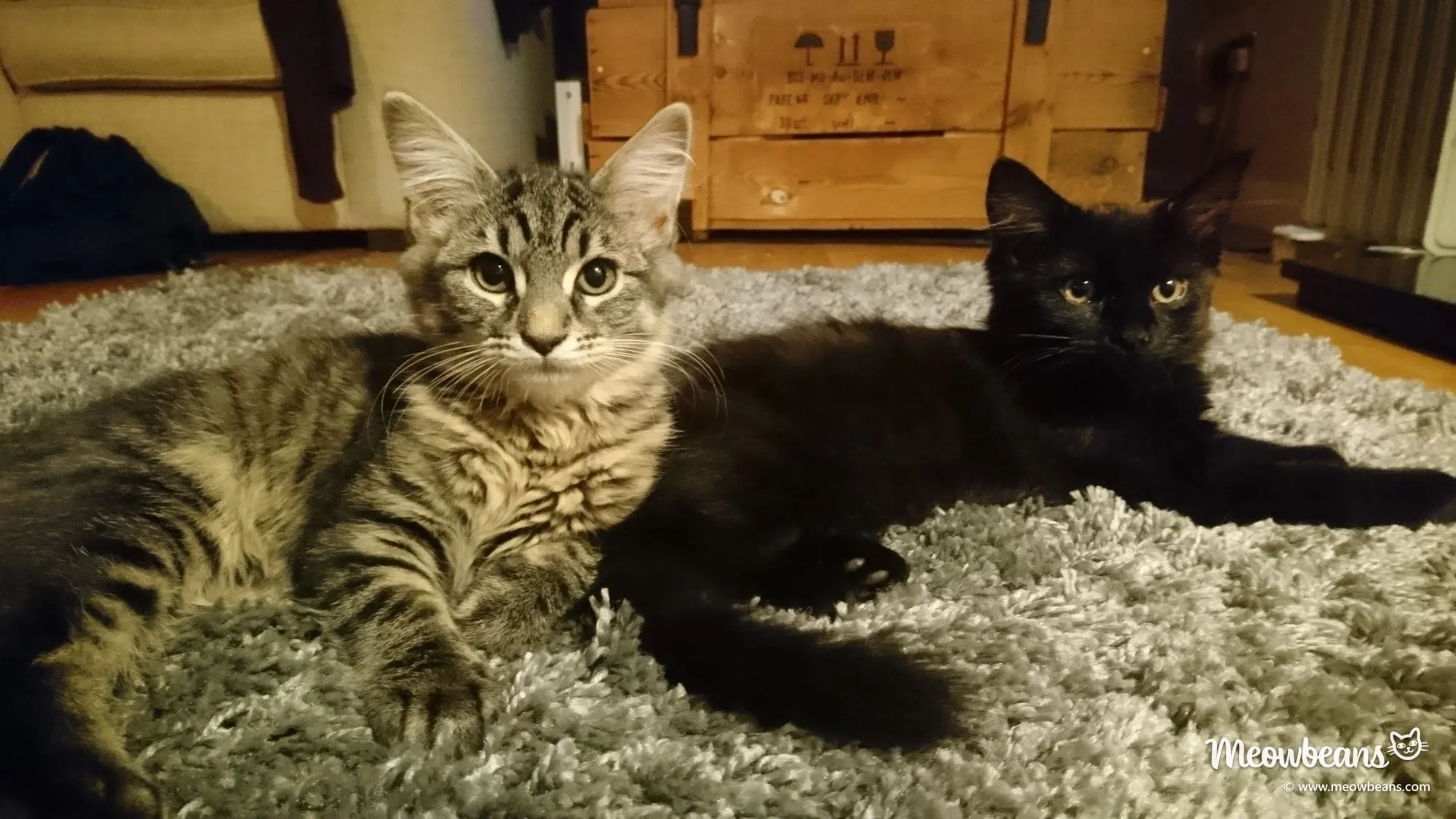
 Max’s long, thick coat. His brother Marshall, a Maine Coon cross, has short fur.
Dealing With Mats
If you find a mat, International Cat Care suggests teasing it apart gently with your fingers, working slowly from the root towards the tip. Check between the toes and pads too, as mats often form there (International Cat Care).
If a mat is tight against the skin, don’t try to brush it out: you risk ripping or tearing the skin. Cats Protection advises taking your cat to the vet, who can give a “de-mat” haircut while your cat is sedated (Cats Protection).
Don’t use scissors. In a thick, matted coat it’s hard to tell where the fur ends and the skin begins, and it’s easy to cut your cat by accident (International Cat Care).
Tips for a Calm Grooming Session
- Start slowly. Let your cat sniff a new tool first, and keep early sessions short.
- Groom at around the same time each day, so it becomes a routine (Cats Protection).
- Take extra care around the armpits and between the back legs, where the skin is thin and sensitive (International Cat Care).
- Check for fleas, lumps or sore skin as you go, and vacuum the loose hair afterwards (Cats Protection).
- Stop if your cat has had enough, and finish with a treat or a game.
If your cat really doesn’t like being groomed, our grooming guide has a section on grooming a fussy Maine Coon.
Sources
Sources checked in October 2026. This guide is general information, not veterinary advice. If your cat has mats close to the skin, bald patches or sore skin, please see your vet.
- International Cat Care: Grooming your cat
- Cats Protection: Tips for grooming long-haired cats
- Governing Council of the Cat Fancy (GCCF): Maine Coon